
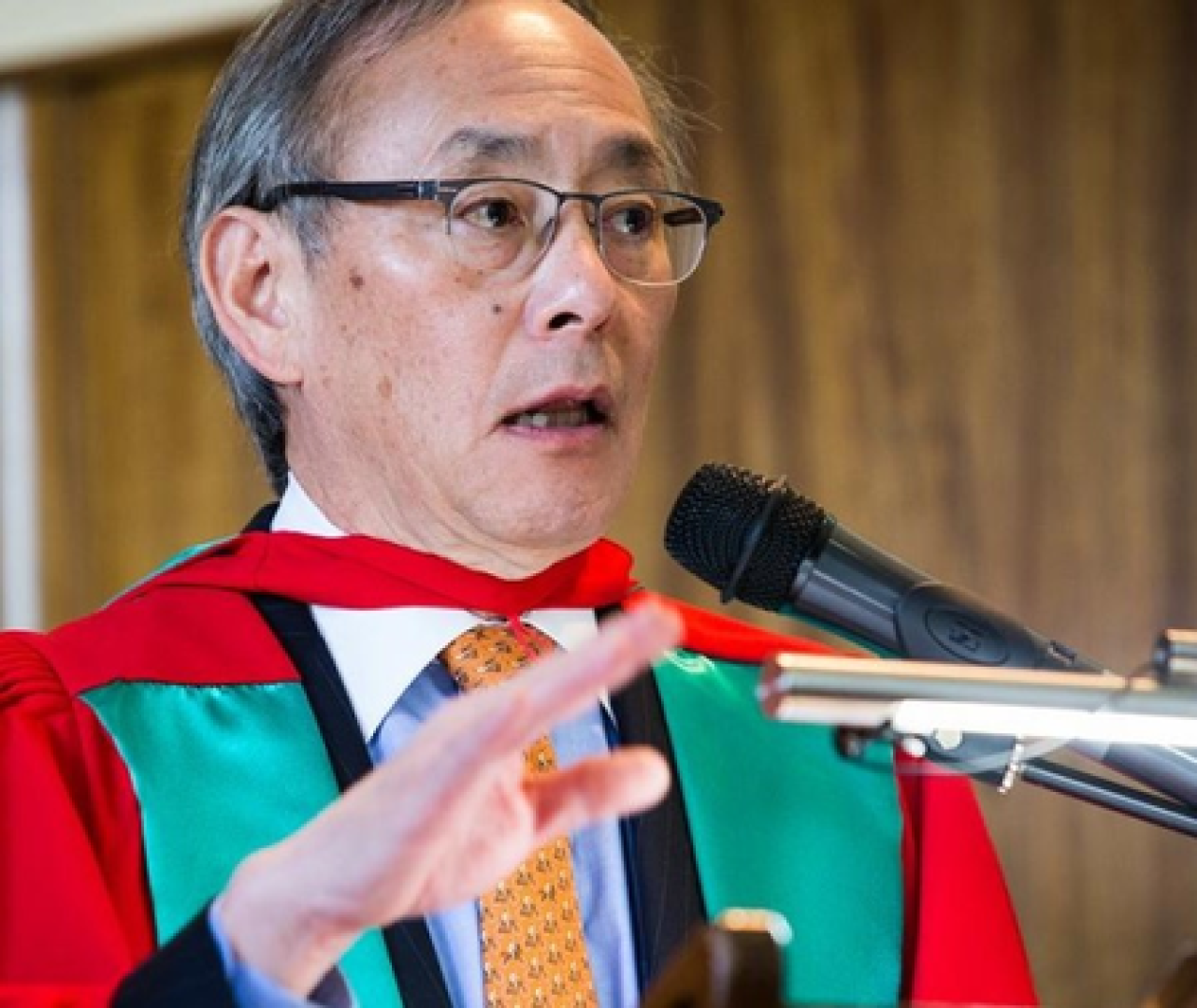
Mumbai, April 18: Former US Energy Secretary and Nobel laureate Steven Chu stated that nuclear power could serve as the foundation for India’s energy independence. He warned that geopolitical tensions are exposing vulnerabilities in the global fuel market.
Chu, who led US energy policy during a time of increasing clean energy cooperation with India, emphasized the strong relationship between the two nations, focusing on sustainable and enduring goals.
In an interview with a news agency, he remarked, “During my tenure as Energy Secretary, I had very close and productive relations with my counterparts in India. They were very serious about sustainability and climate change during those days.”
He expressed hope that India would remain committed to these ideals. “There may have been some setbacks in the US, but I am optimistic that we will return to this commitment,” he added.
Chu stressed the need for major economies to collaborate in addressing global challenges, stating, “In the future, countries like India, China, the US, and the European Union will play pivotal roles in shaping the world.”
Regarding future areas of cooperation, he pointed to nuclear energy and new reactor technologies. “I believe India is developing breeder reactors, which is excellent. These fast reactors help burn a significant amount of fuel for conventional reactors,” he noted.
He linked recent conflicts to a new need for domestic energy security, saying, “I think recent wars (in Ukraine and Iran) have made energy access within borders a critical issue.”
Chu highlighted that nuclear power ensures a stable supply. “I see nuclear energy as a means to produce energy in limited spaces within a country, providing long-term energy. In contrast, the availability of natural gas is typically measured in weeks or, at most, a few months,” he explained.
When asked if nuclear energy could help India achieve energy independence, Chu replied, “Yes, as long as they figure out how to build reactors on budget and on time.”
He cited China’s efficiency in reactor construction as an example, stating, “China has figured it out. They have two dozen reactors that are on budget and on time, and they are engaged in a learning process. They use the same crew to build one to two, and then three to four reactors.”
He added, “The world should follow this example. I am very excited about this. I am a huge fan of decision-making.”
Chu also addressed concerns regarding nuclear waste disposal, stating that it can be managed through technological innovation. “Disposal is a solvable problem,” he said.
He discussed new techniques being developed, explaining, “I am an advisor to a group trying to explore technologies used in oil drilling to drill boreholes a kilometer deep and then side-dispose of nuclear waste without human intervention in canisters.”
He noted that such methods could reduce costs and expand storage options. “This has the potential to provide many geological sites. But most importantly, it will lower costs,” he added.
He further explained, “The difference between manned and unmanned space flights is significant, almost like day and night. If it becomes possible to store resources without creating tunnels and ventilation shafts, it would be a major achievement.”
Chu stated that these advancements reinforce the case for reviving nuclear power. “I am very interested in seeing nuclear energy take on a new form,” he said.
Regarding fossil fuels, he highlighted the growing role of the US in the global supply but cautioned against overestimating its dominance. “The US has become a major supplier of fossil fuels globally,” he noted.
He emphasized the interconnectedness of the global market, stating, “Just because the US is now a big player does not mean that the Middle East, Russia, and other countries are not part of this supply. Therefore, we need more stability in the world.”
Discussing the crisis in the Gulf, Chu warned of long-term economic impacts. “I hope the blockade will end. There is no purpose in it,” he said.
He cautioned, “Even minor disruptions can have long-lasting consequences. Most oil and gas production infrastructure has been preserved. If they start bombing it, it would be disastrous.”
He added, “Even without that, it will take months for the economy to recover. Oil prices, gasoline prices, and diesel fuel prices will not decrease in a week.”
Chu emphasized that consumers may experience delayed relief, stating, “It could take half a year, but it will take time.”
He stressed the importance of stable trade flows, stating that it is crucial not to disrupt established trade patterns, as they have brought real prosperity to the world.
India is one of the fastest-growing major energy consumers, with rapidly increasing demand due to industrial development and urbanization. The country is enhancing its energy mix, including renewable and nuclear power, to reduce dependence on imports and improve long-term energy security.

My name is Ganpat Singh Choughan. I am an experienced content writer with 7 years of expertise in the field. Currently, I contribute to Daily Kiran, creating engaging and informative content across a variety of categories including technology, health, travel, education, and automobiles. My goal is to deliver accurate, insightful, and captivating information through my words to help readers stay informed and empowered.


Leave a Comment