
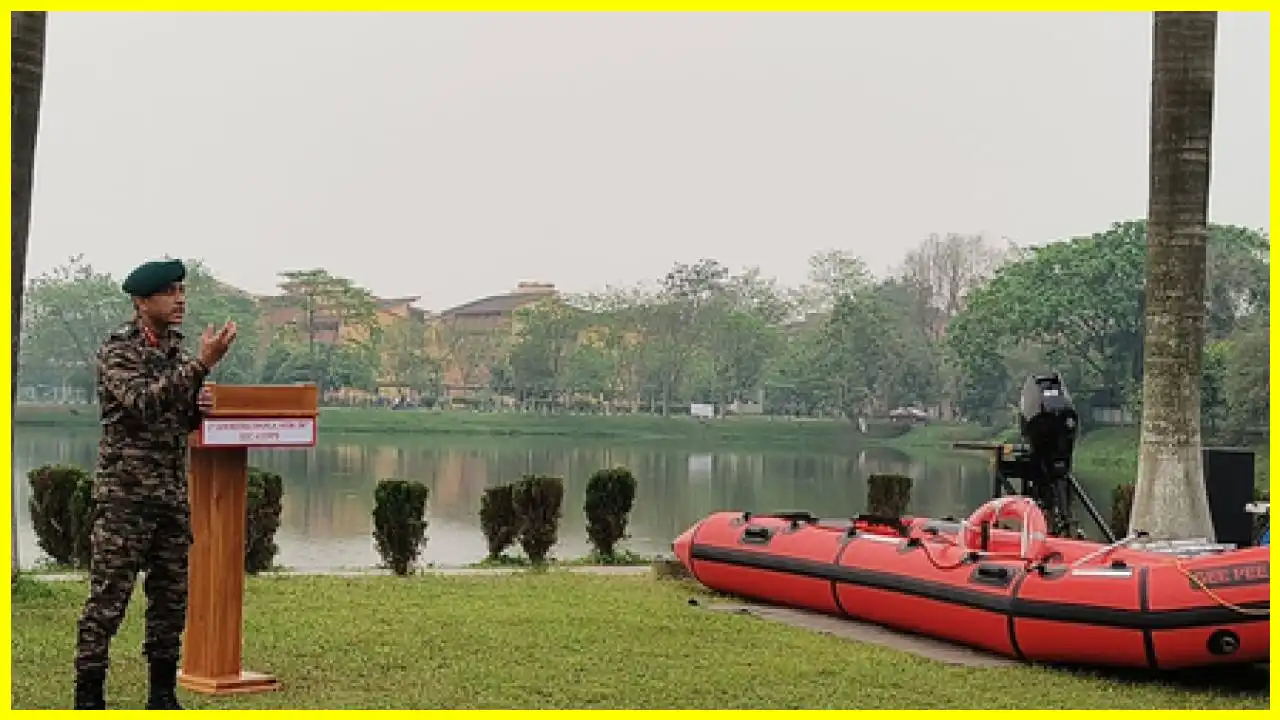
Guwahati, April 18: The Indian Army’s Red Horns Division (Gajraj Corps) organized a joint relief exercise named ‘Exercise Jal Rahat’ at the Indian Institute of Technology (IIT) Guwahati on Saturday. This initiative aims to enhance preparedness for dealing with flood-related disasters in Assam.
The large-scale exercise involved multiple agencies, including the National Disaster Response Force (NDRF), State Disaster Response Force (SDRF), and the Sashastra Seema Bal (SSB). It showcased coordinated efforts to tackle natural calamities effectively.
Simulating real flood conditions, the exercise included rescue operations in deep water, safely evacuating stranded individuals, and utilizing modern technologies like drones. Teams demonstrated their capability to rescue people in drowning situations and provide immediate assistance to affected individuals.
According to officials, the primary goal of this exercise is to ensure better preparedness and rapid response to the frequent flooding in Assam and the northeastern region. The joint exercise emphasized the importance of coordination and swift action among the participating agencies.
Lieutenant General Neeraj Shukla, General Officer Commanding of the Gajraj Corps, oversaw the exercise. He stressed the need for “whole-of-society participation” in disaster management and called for the adoption of principles such as “estimation, preparation, safety, and provision.”
He also highlighted that effective disaster management and resilience enhancement require public involvement. The exercise aimed to build public confidence in the preparedness of security forces and disaster relief agencies.
The event was attended by senior army officials, representatives from state administration, central armed police forces, and disaster management organizations. Approximately 800 participants, including NCC and NSS cadets along with students from schools and colleges in Guwahati, witnessed the demonstration.
Officials reported that all participating agencies committed to regular joint exercises in the future, updating standard operating procedures, and investing in capacity building to strengthen the emergency response system.

Leave a Comment