
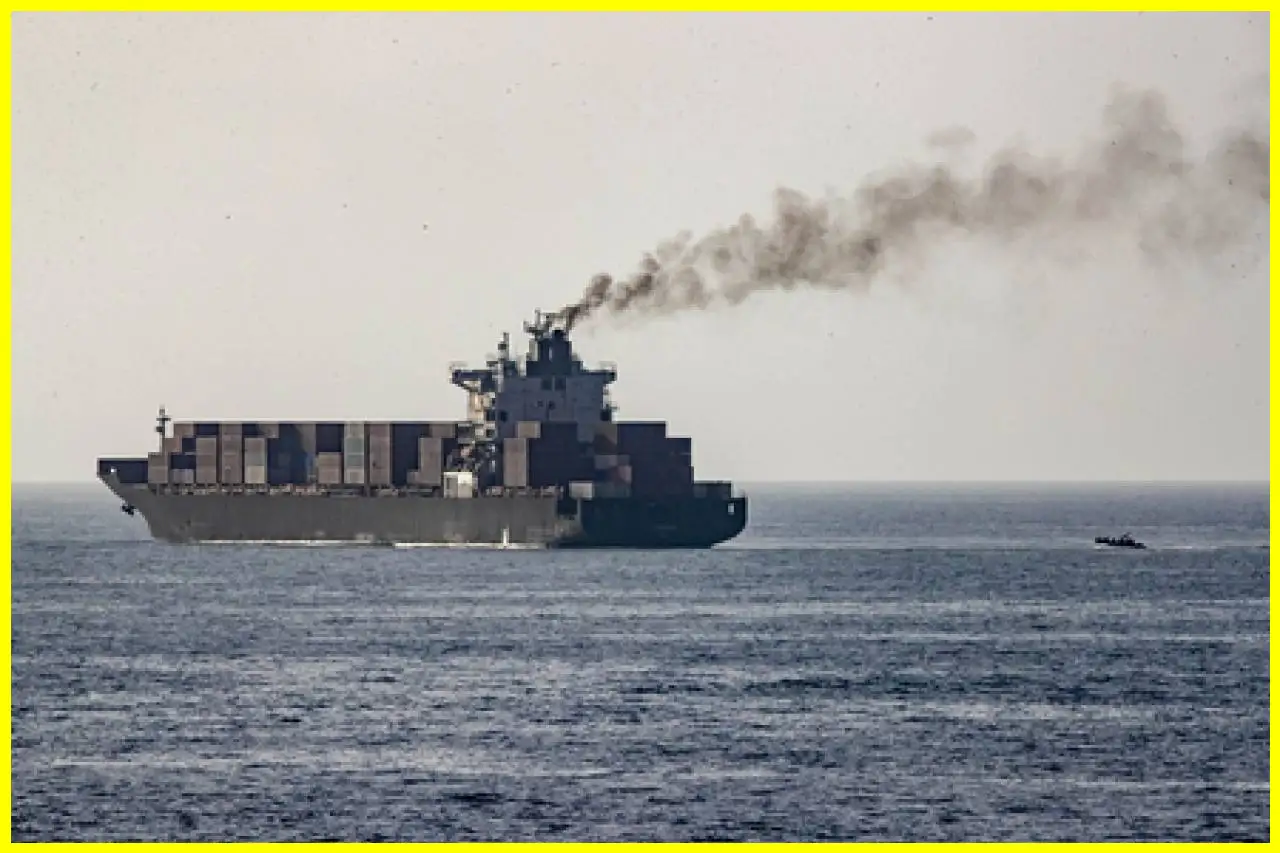
Washington, April 21: Recent media reports indicate that an Iranian cargo ship seized by U.S. forces in the Gulf of Oman was part of a fleet linked to Chinese ports and suspicious supply routes.
According to The Wall Street Journal, the Iranian-flagged container ship MV Tosca is connected to a network of vessels frequently traveling to China, suspected of transporting materials for potential military use.
The report states that the ship was intercepted after attempting to breach a U.S. naval blockade. U.S. forces boarded the vessel after disabling its engine with warning shots.
Shipping data cited by The Wall Street Journal reveals that in the weeks leading up to its seizure, the Tosca made two trips to the Zhuhai port in southern China.
The report also notes that the ship is controlled by a sanctioned Iranian company accused of transporting goods for Tehran’s ballistic missile program.
U.S. officials have not disclosed the cargo’s contents, but analysts suggest that the attempt to breach the blockade indicates the goods could be significant.
Former U.S. Navy officer Charlie Brown told The Wall Street Journal, “Risking a blockade breach might have seemed advantageous to them, but they made a poor decision.”
A separate report from Fox News Digital mentioned that the ship passed through Southeast Asia and Chinese ports before heading towards Iran. Maritime security experts cited in the report indicated that the cargo could be “dual-use,” meaning it may serve both civilian and military purposes.
According to U.S. officials, the ship was intercepted near the Strait of Hormuz, close to Iranian waters, after previously stopping at Port Klang in Malaysia.
Experts suggest that such routes are often used to obscure the origin of goods. Ship-to-ship transfers in Southeast Asian waters are common, making it challenging to track shipments.
China claims it does not supply weapons to Iran and maintains control over the export of dual-use items, but it does not recognize U.S. sanctions against Iran.
The Wall Street Journal reported that Beijing has expressed concern over this seizure and called for restraint.
This incident highlights how Iran’s struggles are intertwined with global trade networks. U.S. officials have intensified actions against vessels carrying prohibited goods under maritime blockade.
The Strait of Hormuz is a crucial route for global energy supplies. Disruptions related to this conflict have already raised concerns in oil and shipping markets.
Iran has long relied on trade relations with countries like China to mitigate the impact of sanctions. As U.S. pressure increases, these ties have become even more critical.

Leave a Comment