
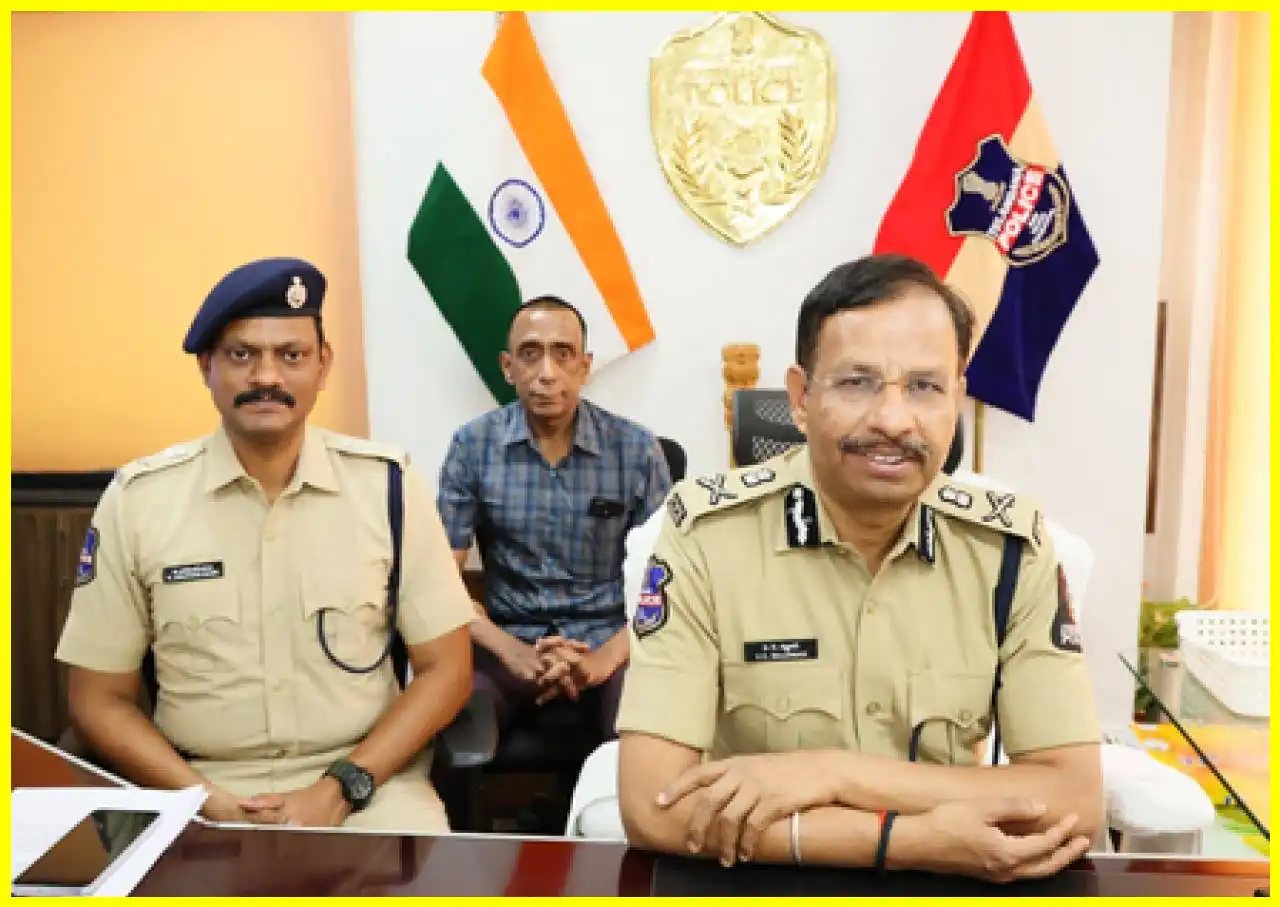
Hyderabad, April 19: The Hyderabad police have successfully dismantled a widespread cyber fraud network, arresting 52 individuals across nine states. Among those apprehended are 32 bank officials implicated in the scam.
Police Commissioner V.C. Sajjanar announced the operation, dubbed ‘Operation Octopus 2.0’, on Sunday. He revealed that 16 specialized teams of experienced investigators conducted simultaneous raids over a span of seven days across the nine states.
The arrested bank officials are linked to various financial institutions. Additionally, 15 account holders were taken into custody for knowingly using their bank accounts for illegal transactions. The police also apprehended five intermediaries who facilitated these accounts and helped transfer money to the main suspects.
During the raids, authorities seized 26 mobile phones, 14 checkbooks, two pen drives, one laptop, and stamps from 21 shell companies.
The police commissioner highlighted a recent surge in cyber crimes, including investment scams, trading fraud, and digital arrests, where fraudsters deceive individuals into parting with substantial sums of money.
This operation follows the earlier ‘Operation Octopus-1’, which resulted in the arrest of 117 suspects across 16 states and uncovered 350 bank accounts linked to approximately 850 cases involving transactions worth nearly ₹150 crores.
In ‘Operation Octopus 2.0’, the focus was particularly on the role of bank officials found to be involved in opening fraudulent accounts, known as mule accounts. The campaign spanned Maharashtra, Delhi, Rajasthan, West Bengal, Karnataka, Gujarat, Andhra Pradesh, Telangana, and Bihar.
The police also discovered that the private banking sector has seen an increase in the opening of such fraudulent accounts, primarily due to negligence in the KYC process. In several instances, accounts were opened without proper verification of customers, which were later exploited for cyber fraud.
–

My name is Ganpat Singh Choughan. I am an experienced content writer with 7 years of expertise in the field. Currently, I contribute to Daily Kiran, creating engaging and informative content across a variety of categories including technology, health, travel, education, and automobiles. My goal is to deliver accurate, insightful, and captivating information through my words to help readers stay informed and empowered.
Leave a Comment