
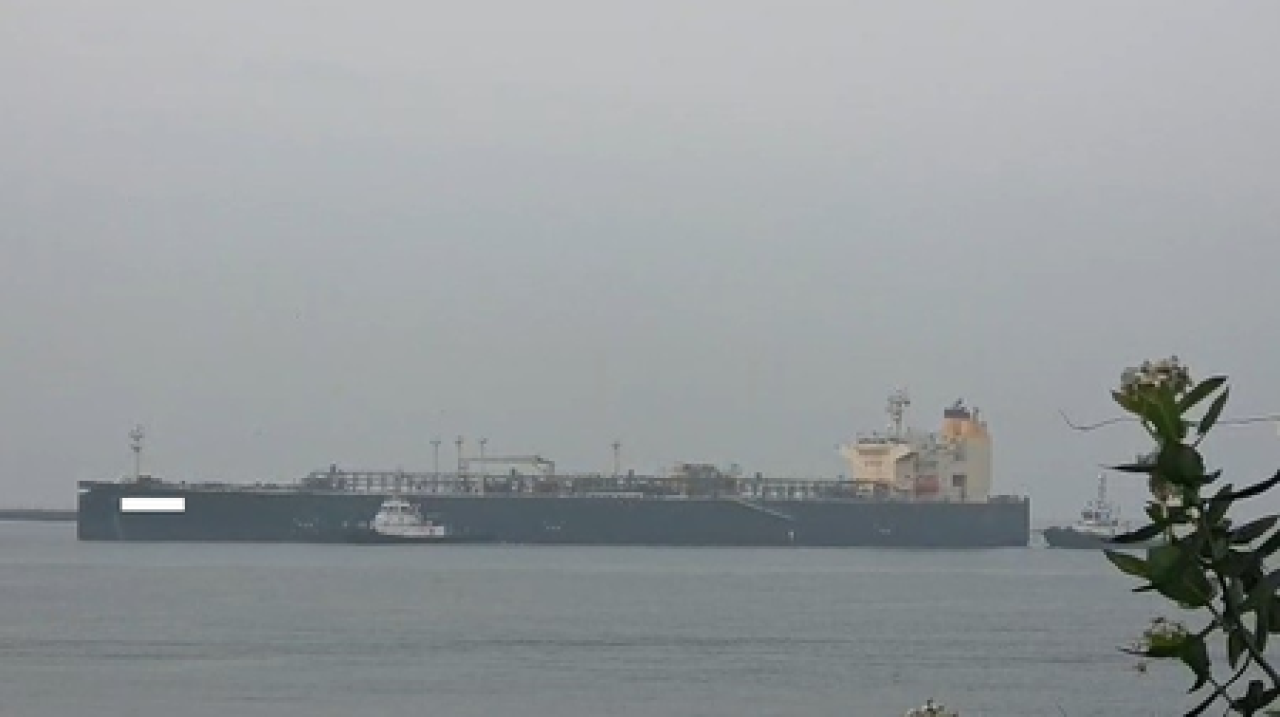
Washington, April 18: Amid the ongoing Hormuz crisis, the United States has recently announced an extension regarding the purchase of oil from Russia. In a new update, the U.S. Treasury Department has extended the previously granted exemption. According to a statement released on the official website of the Treasury, the new deadline for the delivery and sale of restricted Russian oil already loaded on ships has been pushed to May 16.
This decision comes at a time when many countries are grappling with rising energy costs and supply disruptions.
Initially, the U.S. had provided a 30-day exemption, which expired on April 11. The renewed license, issued on Friday (local time), is part of the government’s broader efforts to stabilize global energy prices.
According to the official notification, “All transactions listed under the above authorities—related to the sale, delivery, or offloading of Russian-origin crude oil or petroleum products loaded on any vessel, including restricted vessels, by 12:01 AM Eastern Daylight Time (EDT) on April 17, 2026, are authorized until 12:01 AM EDT on May 16, 2026.”
Eastern Daylight Time (EDT) is observed in the eastern parts of the U.S. and Canada during the summer months. EDT is four hours behind Coordinated Universal Time (UTC) and nine hours and thirty minutes behind Indian Standard Time (IST).
This general license does not permit any transactions involving individuals associated with the Islamic Republic of Iran, North Korea, the Republic of Cuba, covered areas of Ukraine, or the Crimean region, or any entity organized under the laws of these regions.
This move follows comments from U.S. Treasury Secretary Scott Basset, who indicated that Washington has no intention of permanently extending such exemptions amid rising geopolitical tensions.
During a media briefing on Wednesday, Basset stated, “We will not renew the general licenses for Russian and Iranian oil. This is oil that was on the water before March 11. That is all used up.”
Meanwhile, following the temporary reopening of Iran’s Strait of Hormuz, global oil prices saw a significant drop of nearly 9%, approaching $90 per barrel.
This ongoing conflict has already created a situation described by the International Energy Agency as the worst disruption to global energy supply in history.
As tensions reach their eighth week, over 80 oil and gas facilities across the Middle East have been damaged.
Additionally, Tehran has warned that if the U.S. Navy continues to blockade Iranian ports, it may close the Strait of Hormuz again.
Commenting on the extension of the exemption, Russian President’s envoy Kirill Dmitriev stated in a social media post, “U.S.-Russian economic and energy cooperation will continue.”
He previously mentioned that the initial exemption on Russian oil could yield up to 100 million barrels of crude oil, roughly equivalent to one day’s global oil production.
–

Leave a Comment