
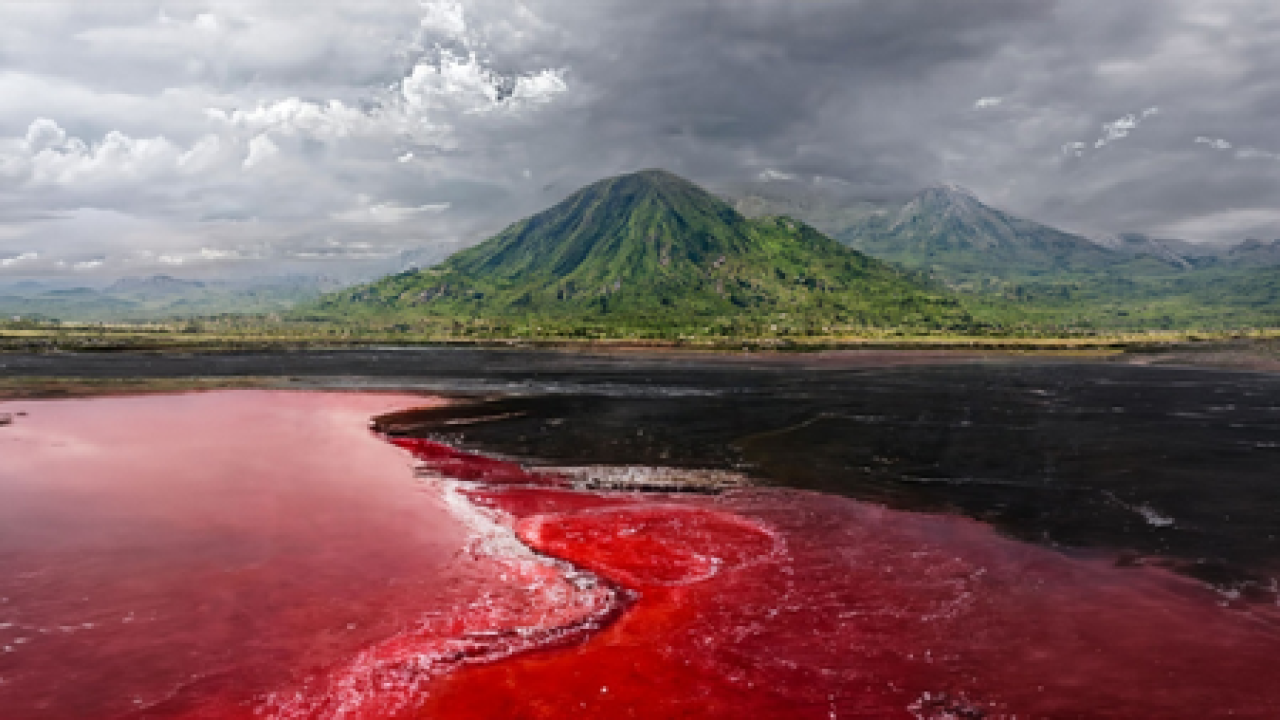

New Delhi, April 15: Lake Natron, located in northern Tanzania, is one of the world’s most enigmatic and perilous lakes. Few dare to approach its shores, as the water here is lethal to most living creatures.
The lake’s water is extremely hot, saline, and highly alkaline, with a pH level that can reach 10.5, making it significantly more acidic than regular water. Temperatures often range from 40 to 60 degrees Celsius. Animals that fall into the lake typically perish within moments, their bodies becoming encased in minerals and resembling stone.
Images captured by NASA’s Landsat 8 satellite reveal the lake’s striking beauty. The water appears deep red or pink, particularly in photographs taken in March 2017, coinciding with the onset of the rainy season.
The lake’s unique chemical composition is a result of nearby volcanic activity. Approximately 20 kilometers away, the Ol Doinyo Lengai volcano emits sodium carbonate-rich lava, which flows into the lake through underground fissures as hot springs. Due to low rainfall and high evaporation rates, the water becomes increasingly concentrated.
Despite these harsh conditions, a peculiar balance of life exists in Lake Natron. Halophilic microorganisms thrive in the water, giving it its distinctive red and pink hues. Notably, large colonies of lesser flamingos nest around the lake. Approximately 75% of East Africa’s lesser flamingo population is born in this area. These birds feed on the microorganisms that flourish in the saline water, finding safety from predators.

My name is Narendra Jijhontiya. I am an experienced content writer with several years of expertise in the field. Currently, I contribute to Daily Kiran, creating engaging and informative content across a variety of categories including TECHNOLOGY, health, travel, education, and automobiles. My goal is to deliver accurate, insightful, and captivating information through my words to help readers stay informed and empowered.
Leave a Comment