
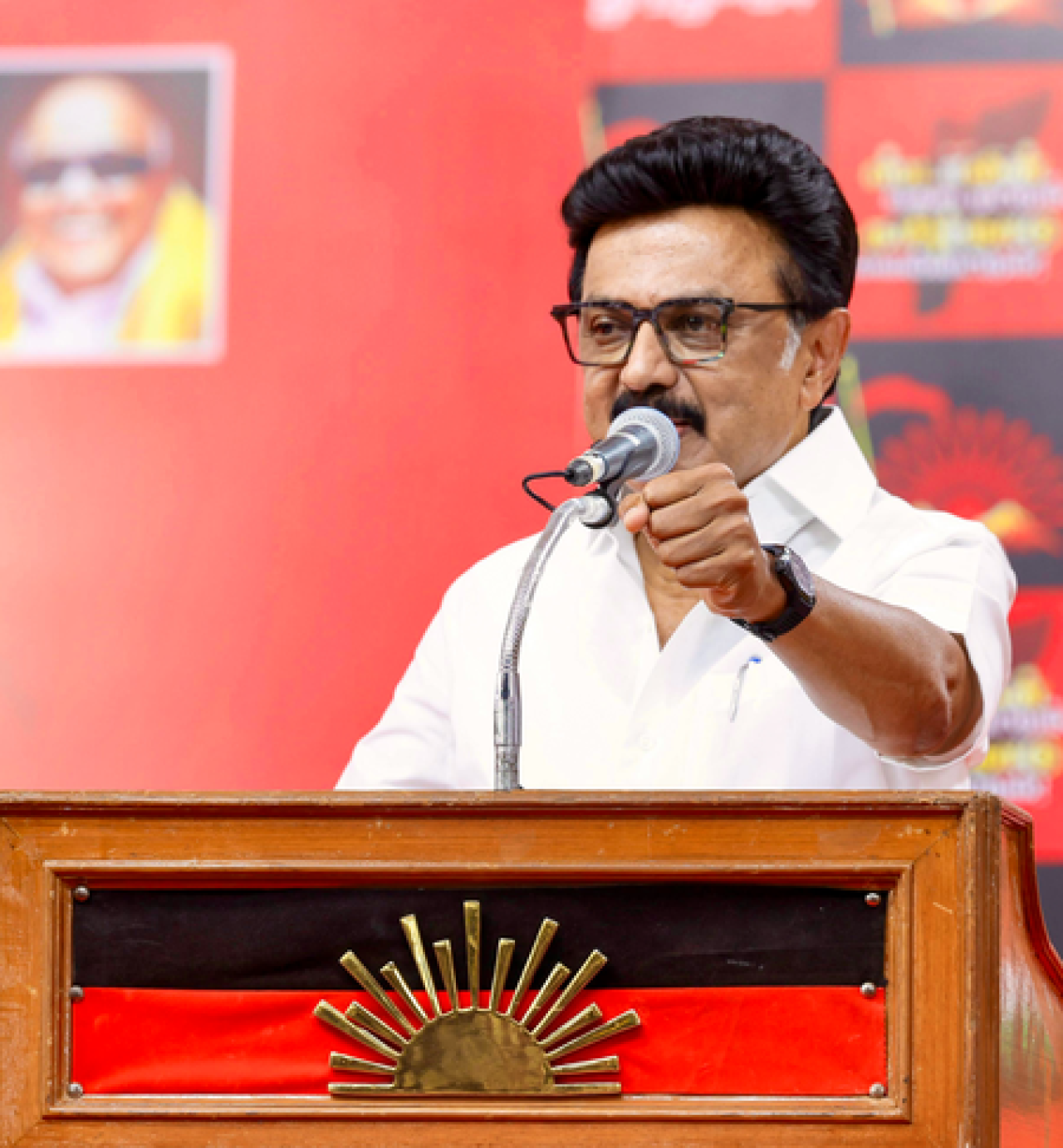

Chennai, April 15: The Dravida Munnetra Kazhagam (DMK), a major political party in Tamil Nadu, has vocally opposed the central government’s proposed redistricting exercise. This initiative aims to increase the number of Lok Sabha seats based on population growth, raising concerns among southern states.
Since the 1971 census, when India’s population was approximately 550 million, the Lok Sabha has maintained a total of 543 members. With the current population exceeding 1.4 billion, the central government plans to expand parliamentary representation through a new redistricting process.
Reports indicate that the proposed redistricting amendment bill seeks to increase the number of Lok Sabha MPs from 543 to around 850, while representation from union territories would rise from 20 to 35. The bill is expected to be introduced during the special parliamentary session scheduled for the next three days.
Southern states, including Tamil Nadu, Kerala, Andhra Pradesh, and Karnataka, have strongly opposed this move. They argue that it would disadvantage regions that have successfully implemented population control measures. There are fears that redistributing seats based on population could disproportionately benefit northern states like Uttar Pradesh, which have higher population growth rates.
According to reports, the central government is considering redistricting based on the 2011 census or earlier data, rather than waiting for the mandatory census after 2026, further escalating the controversy.
Tamil Nadu Chief Minister M.K. Stalin has sharply criticized the proposal, warning that it would reduce the state’s representation in Parliament and undermine federal principles. He cautioned that if the central government proceeds with this plan, his party would initiate a significant movement, reminiscent of the old DMK.
In contrast, Edappadi K. Palaniswami has attempted to alleviate concerns, asserting that the redistricting process would not adversely affect Tamil Nadu. Estimates suggest that Tamil Nadu’s Lok Sabha seats could increase from the current 39 to about 50, while Uttar Pradesh’s representation could rise from 80 to approximately 143, significantly altering the balance of power in Parliament.
Meanwhile, the central government also plans to introduce a women’s reservation bill alongside the redistricting proposal, aiming to implement 33% reservation for women in the upcoming 2029 general elections.
My name is Himanshu Tiwari. I am an experienced content writer with several years of expertise in the field. Currently, I contribute to Daily Kiran, creating engaging and informative content across a variety of categories including TECHNOLOGY, health, travel, education, and automobiles. My goal is to deliver accurate, insightful, and captivating information through my words to help readers stay informed and empowered.
Leave a Comment