
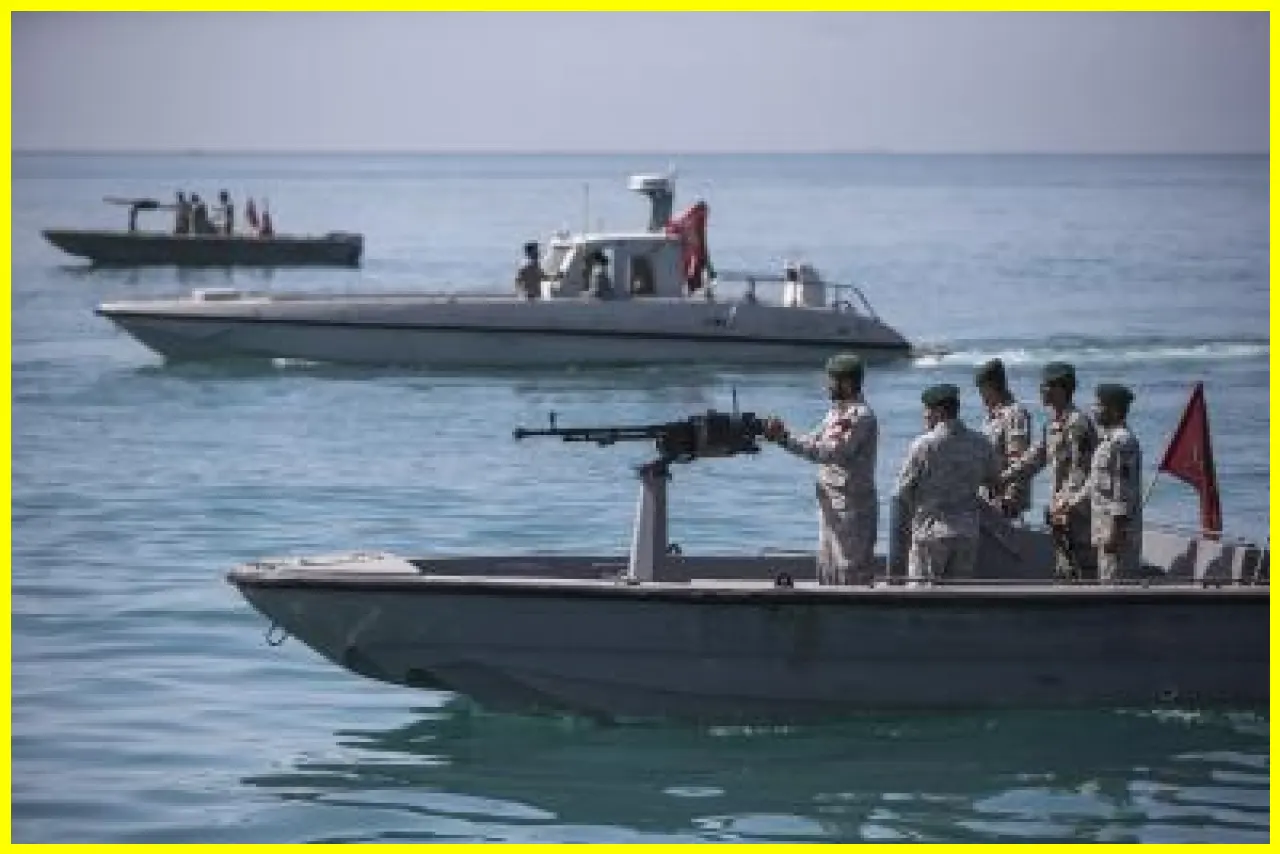
Tehran, April 18: The Islamic Revolutionary Guard Corps (IRGC) has issued a statement that could escalate tensions amid the ongoing U.S. blockade of the Hormuz Strait. Iran has announced strict control over this vital maritime route, deciding to halt the movement of vessels. The Iranian government stated that this restriction will remain in place until the U.S. lifts its blockade on Iranian ports.
The IRGC also claimed to have completely dismantled intelligence networks linked to the U.S., Israel, and the UK. In a statement from the IRGC’s joint military command, it was asserted that control over the Hormuz Strait has returned to a state similar to previous conditions.
According to a report from Iran’s IRIB broadcaster, the IRGC command accused the U.S. of failing to respect the strategic importance of this waterway, which is now under strict management and control by armed forces. Earlier, Iran had hinted at the possibility of reopening the route, but changed its decision in light of the U.S. stance.
The IRGC command stated, “As long as the United States does not restore complete freedom of movement for ships traveling to and from Iran, strict control over the Hormuz Strait will continue.” U.S. President Donald Trump recently made it clear in a statement regarding the ceasefire that the blockade will remain until an agreement is reached with Iran, which includes discussions on its nuclear program. Following this, Iran adopted a firm stance, deciding to halt transit through the strait.
Additionally, the IRGC claimed to have identified and severed ties with several alleged networks connected to the U.S., Israel, and the UK. This information was revealed by the intelligence wing of the IRGC. Reports indicate that these networks were involved in espionage activities and attempting to create instability within the country.
According to the IRGC, these alleged “cells” were active in East Azerbaijan, Kerman, and Mazandaran provinces, where security agencies have taken action to neutralize them.

My name is Himanshu Tiwari. I am an experienced content writer with several years of expertise in the field. Currently, I contribute to Daily Kiran, creating engaging and informative content across a variety of categories including TECHNOLOGY, health, travel, education, and automobiles. My goal is to deliver accurate, insightful, and captivating information through my words to help readers stay informed and empowered.
Leave a Comment