
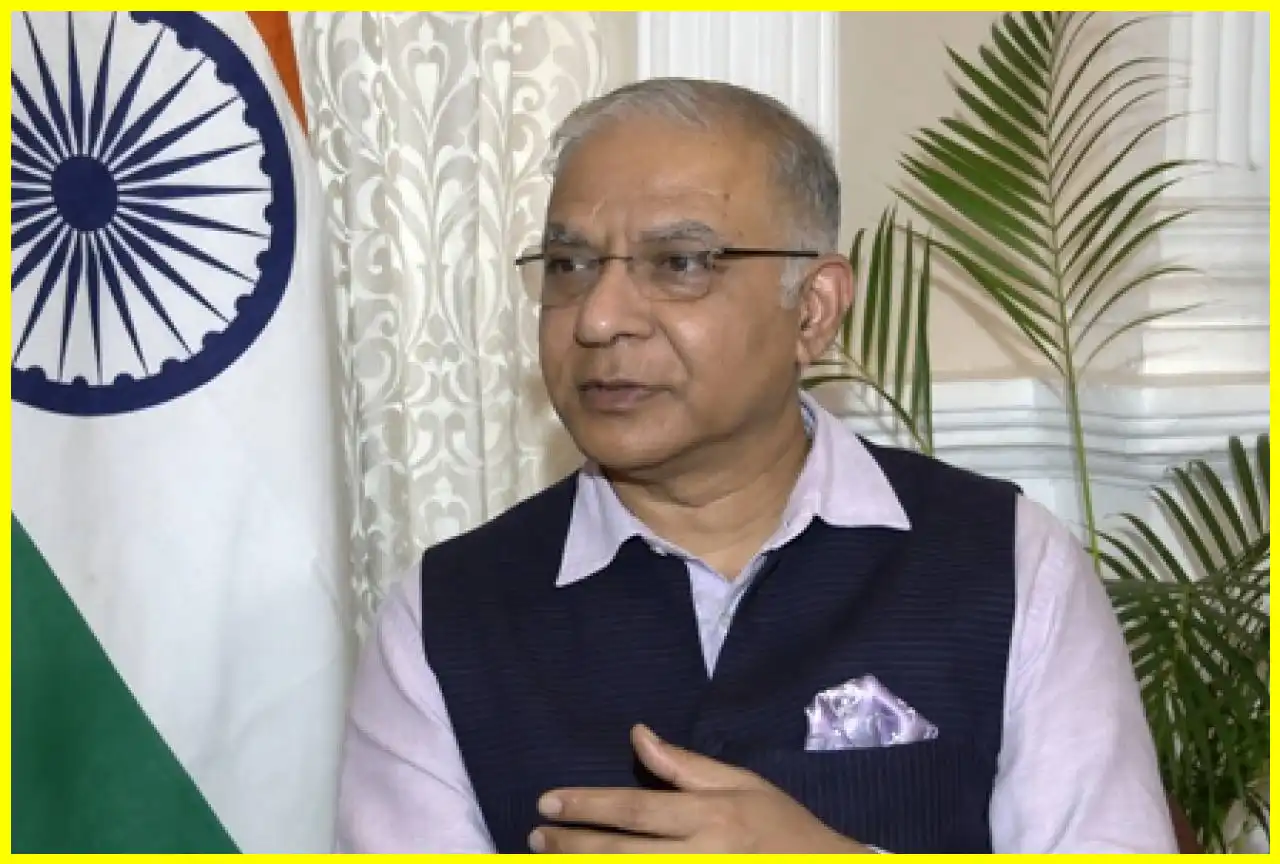
Colombo, April 18: India’s Vice President C. P. Radhakrishnan is set to visit Sri Lanka on April 19 for a two-day trip. This visit marks a significant milestone in India-Sri Lanka relations, being the first bilateral visit by an Indian Vice President in 26 years. It has the potential to reshape the growing strategic, economic, and cultural ties between the two nations. Indian High Commissioner to Sri Lanka, Santosh Jha, elaborated on the importance of this visit in an interview.
The visit comes at a time when high-level contacts between the two countries have been steadily increasing. Sri Lankan President Ranil Wickremesinghe has visited India in recent years, and Prime Minister Narendra Modi traveled to Colombo in April 2025. The recent visit of Sri Lankan Prime Minister Dinesh Gunawardena to India has further strengthened this dialogue. Such high-level visits provide an opportunity for a comprehensive review of bilateral relations, accelerating ongoing projects and providing political guidance for stalled initiatives. Concrete outcomes are expected by the end of this visit.
When asked how this visit defines the relationship between the two countries, High Commissioner Jha emphasized that the growing trust and warmth between the peoples of India and Sri Lanka are the most significant aspects of their relationship. Progress in trade, investment, and connectivity, along with the engagement of ordinary citizens, is elevating these ties. The business relationships have been strong, with both nations being good friends and trustworthy partners. This connection is not merely due to trade deals but stems from goodwill and a unique bond between the two peoples.
India has also assisted Sri Lanka in disaster recovery following floods. When asked about potential new agreements or partnerships during the visit, Jha noted that India has consistently been the first to offer help whenever Sri Lanka faces difficulties over the past 20-25 years. For instance, during Cyclone Dithav, India provided immediate assistance on the very day of the landfall.
This reflects a new India that is eager to assist its neighbors as a friend and ally. India has sent relief supplies and is currently implementing a $450 million aid package for reconstruction efforts. The $4.1 billion assistance provided during Sri Lanka’s economic crisis in 2022 has further solidified this trust.
Regarding the key areas of strengthening cooperation during this visit, Jha mentioned several important projects underway, including electricity grid connectivity, solar energy initiatives, and plans to develop Trincomalee as an energy hub. Additionally, a digital identity project based on India’s model is being implemented in Sri Lanka, providing unique IDs to every citizen.
When discussing how this visit aligns with India’s “Neighborhood First” policy, Jha highlighted the strategic importance of Sri Lanka in the Indian Ocean region. Both nations prioritize maritime security, regional stability, and mutual cooperation. Platforms like BIMSTEC and the Colombo Security Conclave are expanding this collaboration, with serious discussions on the blue economy.
On cultural and educational exchanges, Jha noted that cultural and religious ties remain the strongest link between India and Sri Lanka. The shared Buddhist heritage has led to an increase in pilgrimage and tourism exchanges. Indian tourists are drawn to Sri Lanka’s Ramayana circuit, which features significant sites like the Sita Amman Temple. The Vice President will also visit this temple, a key location in Ramayana history. Similarly, the Buddha circuit in India attracts visitors from Sri Lanka, reinforcing these deep-rooted connections.
Tourism is thriving, with Sri Lanka receiving the highest number of tourists from India. Last year, this accounted for nearly 25% of all visitors, a trend that has persisted for the last 15 to 20 years. Efforts are ongoing to promote tourism through social media and events, with investments being made in areas that can enhance tourism. For example, grant assistance has been announced for the Trivaram Temple in Trincomalee, another Ramayana site, and Anuradhapura is also being developed as a tourist destination.
Finally, when asked what message he would like to convey to other neighboring countries in light of current conditions, Jha stated that the clear message is that India stands firmly with its neighbors, especially in challenging global circumstances.

Leave a Comment