
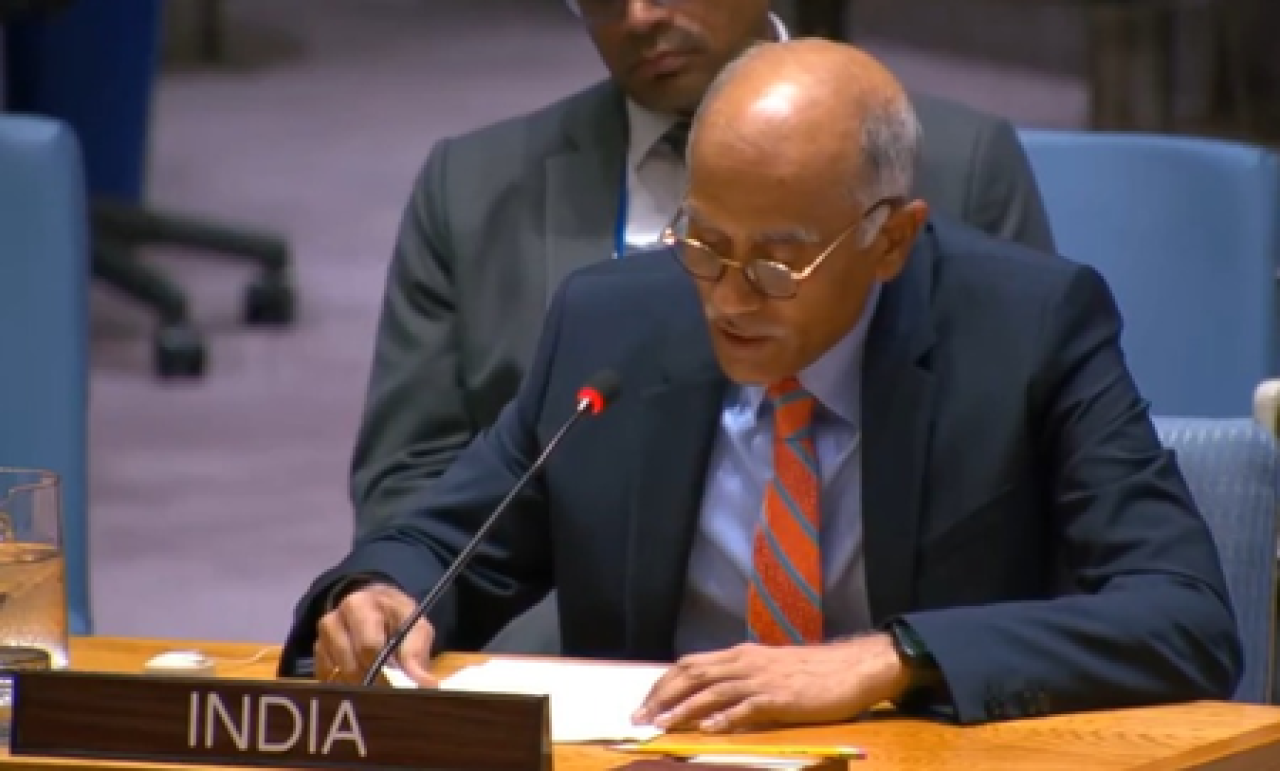

New York, April 15: India has long advocated for reforms in the United Nations Security Council (UNSC). Recently, India’s Permanent Representative to the UN, Harish Parvatheneni, reiterated the nation’s stance on membership and veto power. He opposed the two-tier permanent membership proposal and agreed to a 15-year delay on veto power as part of the G4’s reform agenda for the UNSC.
The ‘two-tier’ permanent membership proposal aims to create a new category of permanent seats for new members. However, the existing veto power held by the P5 (the United States, Russia, China, France, and the United Kingdom) would not extend to these new permanent members, which India strongly contests.
While representing India at the UN, P. Harish stated, “There are two fundamental reasons why the UNSC framework appears imbalanced, raising questions about its legitimacy and representation: membership and the veto system. There is broad consensus on the need for reform in both areas. It is evident that the framework established nearly 80 years ago no longer aligns with today’s changing geopolitical realities. Extensive discussions have previously taken place on these issues, particularly regarding the veto system, which is considered crucial for intergovernmental negotiations (IGN).”
India emphasized the need to expand the category of permanent members with veto power. Harish noted that the only reform in the council during the 1960s, which merely increased the temporary category, inadvertently enhanced the relative strength of veto holders. The ratio of permanent to temporary members with veto power shifted from 5:6 to 5:10, further benefiting those with veto rights. Any reform that does not increase the permanent category with veto power will exacerbate this imbalance and inequality. Therefore, expanding the veto-holding permanent category is essential for genuine reform in the Security Council.
P. Harish asserted, “For real reform in the Security Council, it is crucial to expand the permanent category with veto rights.”
During the discussions, India supported a statement from Norberto Moretti, Brazil’s Deputy Representative, who suggested that new permanent members should delay using their veto for 15 years until a review is conducted. India is part of the G4 group, alongside Brazil, Germany, and Japan, advocating for UNSC reform and supporting each other for permanent seats in the reformed council.
Moretti stated, “The G4 proposes that new permanent members should demonstrate openness and flexibility by refraining from using their veto until a decision is made during the 15-year review.”
However, some countries, particularly Italy and Pakistan, have campaigned against adding permanent membership, claiming that veto power holders would further weaken the council. Moretti argued that increasing the number of permanent members would alter the power dynamics within the council, making it more democratic, even if veto rights are postponed for review after 15 years.
P. Harish highlighted that the only reform in the council in 1965, which added four temporary members, effectively granted a “relative advantage” to the five permanent members with veto power.
Addressing the demand for a veto moratorium, India’s Permanent Representative noted, “Calls for a veto moratorium are rising. In 2022, Resolution 76/262 was adopted to convene a formal General Assembly meeting within ten days of veto use for discussion. However, this has not been an effective deterrent.”
He further explained that permanent members often use their veto in line with national interests. Until clear provisions are added to the UN Charter to impose effective limits on veto use, control over it remains unlikely. Ironically, any changes to the Charter require amendments, which again fall under the veto’s purview.
–

Leave a Comment