
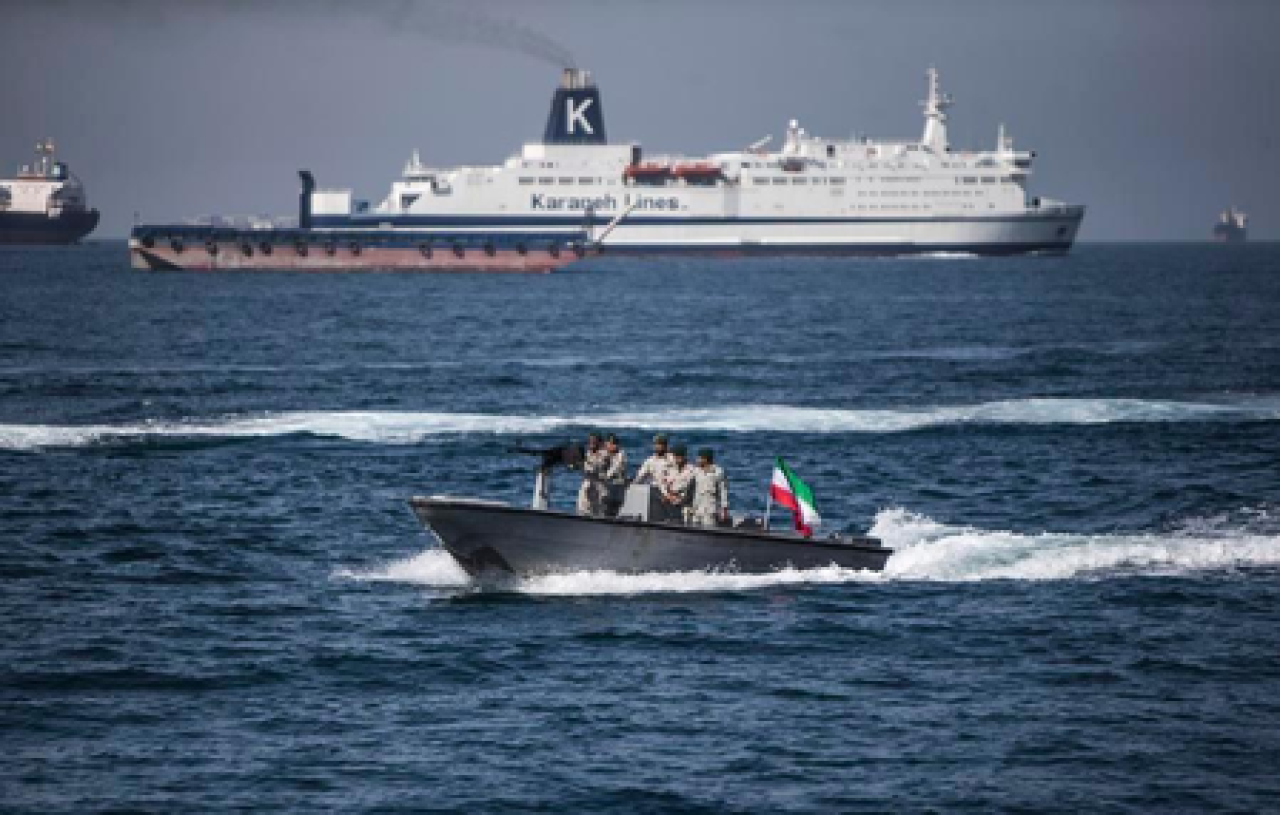

Washington, April 15: European nations are devising a plan for the Strait of Hormuz following a month-long conflict between the U.S. and Iran. This initiative aims to secure shipping routes in the Hormuz Strait without direct U.S. intervention. The ongoing U.S.-Iran tensions have reshaped transatlantic relations.
Transatlantic relations refer to the strategic, security, political, and economic partnership among the U.S., Canada, and the European Union, considered a cornerstone of global order since World War II.
According to a report by The Wall Street Journal, a proposal led by the UK and France is in the works. This plan seeks to establish a significant international coalition to restore maritime routes once the fighting ceases.
Officials indicate that the initiative will include mine-clearing operations and naval deployments. However, countries directly involved in the conflict, such as the U.S., Israel, and Iran, will be excluded from this coalition.
French President Emmanuel Macron stated that the mission will be defensive. European vessels will not operate under U.S. command. The goal is to reassure shipping companies that it will be safe to return once hostilities end.
The plan will only be launched when peace is restored. French Foreign Minister Jean-Noël Barrot mentioned that the coalition will collaborate with countries bordering the strait, including Iran and Oman, suggesting that Tehran’s approval may be necessary for any deployment.
Germany is expected to play a crucial role. Berlin has been cautious regarding foreign military operations but may provide ships and surveillance assets, enhancing the mission’s significance.
The plan has three main objectives: first, to prepare logistics for the hundreds of vessels stranded in the strait; second, to conduct extensive demining after Iran mined parts of the waterway at the conflict’s onset; and third, to deploy naval escorts and surveillance to ensure safe passage.
Analysts believe that demining will take time. Europe possesses greater capacity than the U.S., which has reduced its minesweeping fleet. Even after a ceasefire, Western naval presence may be necessary to reassure insurance companies and shippers. Mujtaba Rahman from the Eurasia Group stated, “At some point, an escort system or convoy will be needed for ship safety.”
This plan is somewhat based on the EU’s Operation Aspida in the Red Sea, which provided naval escorts to protect commercial vessels from Houthi attacks. The Hormuz initiative will differ from the larger U.S.-led operations already deployed in the region.
The proposal emerges amid growing differences between Europe and Washington. U.S. President Donald Trump has urged European allies to assist in reopening the strait. However, European leaders have opposed this, warning that such actions could escalate the conflict and expose vessels to missile threats.
Officials have invited China and India to participate in discussions, though it remains unclear whether they will engage.
The Strait of Hormuz is vital, carrying nearly one-fifth of the world’s oil. Any disruption impacts the global energy market, including major importers like India.
This plan signifies a major shift, raising questions about the long-standing military leadership of the U.S. European nations are preparing to take on greater security responsibilities, especially along crucial trade routes.

My name is Narendra Jijhontiya. I am an experienced content writer with several years of expertise in the field. Currently, I contribute to Daily Kiran, creating engaging and informative content across a variety of categories including TECHNOLOGY, health, travel, education, and automobiles. My goal is to deliver accurate, insightful, and captivating information through my words to help readers stay informed and empowered.
Leave a Comment