
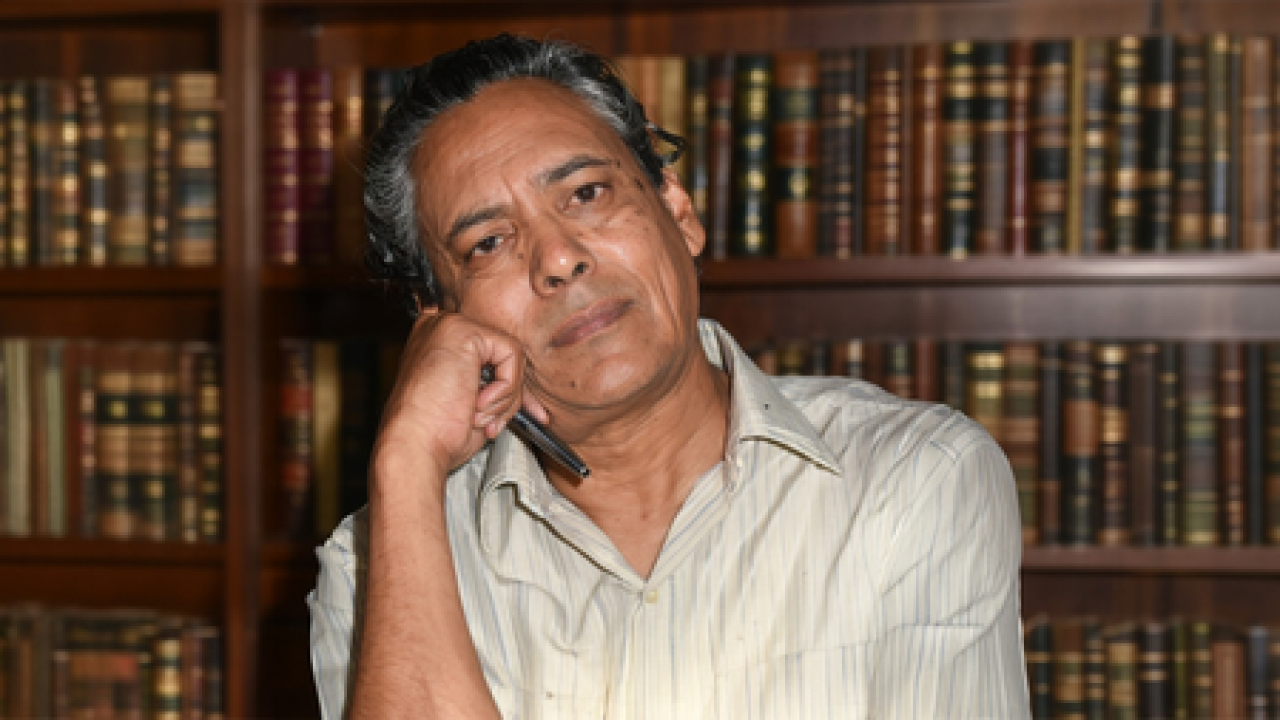

Mumbai, April 14: Born on April 15, 1922, in Jaipur, Iqbal Hussain lived in two worlds. On one side, he received an English education, while on the other, he learned the intricacies of Urdu and Persian from his grandfather, the renowned poet Fida Hussain. After his first love ended unfulfilled at the age of twenty, he adopted the pen name ‘Hasrat,’ meaning ‘unfulfilled desire.’ He later gained fame in the film industry as Hasrat Jaipuri.
In 1940, he moved to Bombay with his wife. During this time, he worked as a ticket collector during the day and became a star at the city’s grand mushairas by night. He described himself as a ‘colorful personality.’
While reading his poignant poem “Mazdoor Ki Laash” at a mushaira, he caught the attention of the legendary actor Prithviraj Kapoor, who recognized his talent and sent him to his son, Raj Kapoor.
Raj Kapoor was working on his film “Barsaat” (1949) and asked Hasrat to write a song based on a tune he played for him, giving him just 24 hours. The next day, Hasrat returned with the lyrics for “Jiya Bekarar Hai, Chhai Bahar Hai.” Raj Kapoor was thrilled, and the song became immensely popular.
Hasrat had words for every season of love. Whether it was the carefree style of Shammi Kapoor (“Ehsaaan Tera Hoga Mujh Par”), the vivacity of Dev Anand, or the playful spirit of Kishore Kumar (“Zindagi Ek Safar Hai Suhana”), Hasrat’s lyrics resonated deeply with audiences.
For the 1969 film “Prince,” he wrote a song inspired by dancers at a Paris nightclub (“Badan Pe Sitare Lapete Hue”), which remains a party favorite to this day.
At the peak of his career, earning millions, Hasrat’s wife advised him to invest all their money in Mumbai’s real estate. Even when film offers dwindled, they lived comfortably on rental income, never compromising his principles or artistry for money.
Hasrat Jaipuri passed away on September 17, 1999, at the age of 77, leaving behind a treasure trove of over 1,200 songs that continue to be priceless.

Leave a Comment