

Mumbai, April 14: India’s telecom sector is evolving. For years, the focus was on expansion—bringing more users online, reducing tariffs, and scaling operations. That phase is largely complete. Now, a quieter but crucial shift is underway: ensuring user safety.
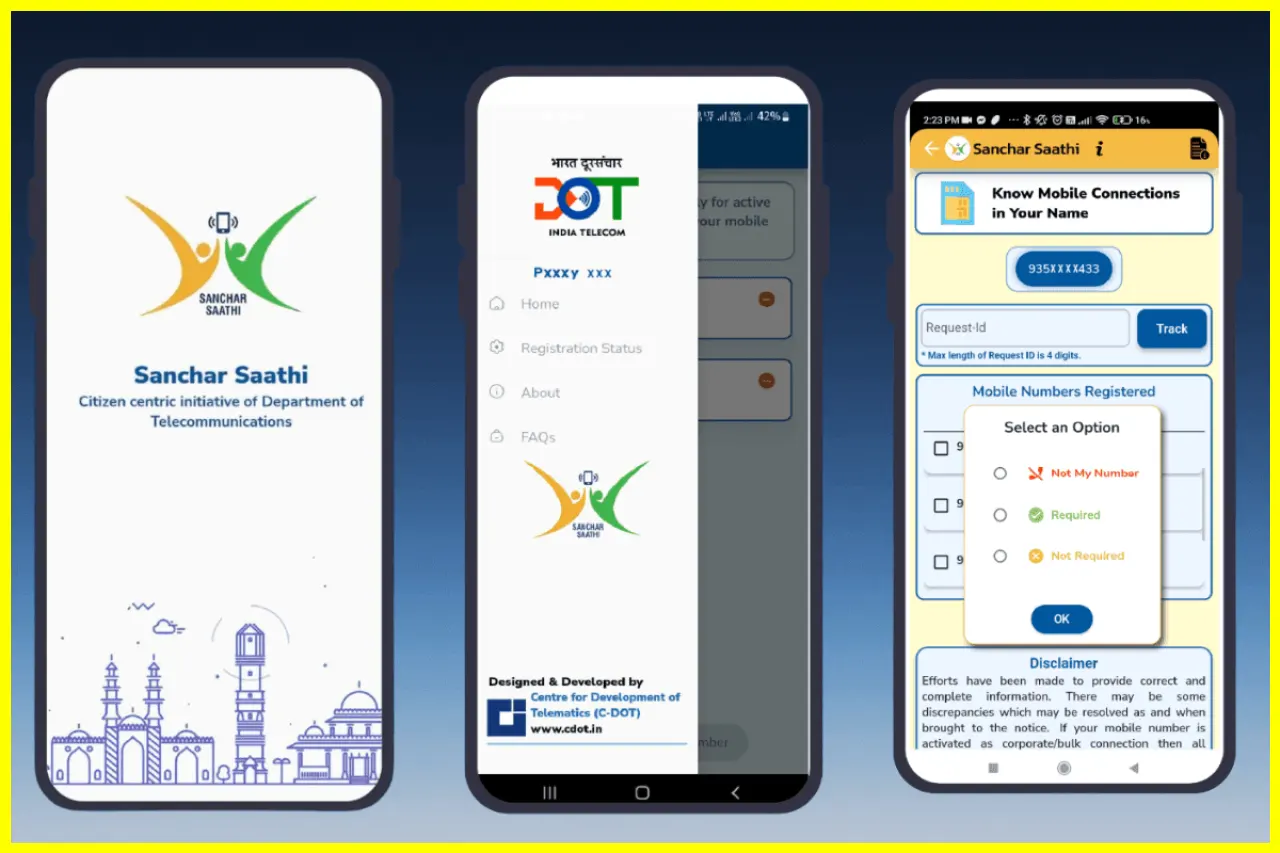
The Department of Telecommunications (DoT) is placing increased emphasis on telecom security. Its latest initiative, the Sanchar Saathi platform, embodies this change. The core message is clear: users must understand what is linked to their identity, especially regarding mobile connections.
A Risk That Often Goes Unnoticed
A SIM card may seem insignificant, but it is central to a user’s digital life. It connects to bank accounts, UPI services, email logins, and social media platforms. Any misuse at this level can escalate quickly. In recent years, fraudsters have increasingly relied on SIM cards obtained through fake or misused documents. These numbers are then used for scam calls, phishing messages, or OTP-based financial fraud. Alarmingly, many individuals are unaware that a mobile number is registered in their name.
This issue is particularly concerning because it often goes unnoticed. By the time it is detected, the damage may already be done.
Bringing Visibility Back to the User
The DoT’s strategy with Sanchar Saathi revolves around one key idea: visibility. Instead of keeping telecom data confined within operator systems, the platform empowers users to check it themselves. Through Sanchar Saathi, individuals can view how many mobile numbers are registered in their name and report anything suspicious. This simple feature addresses a long-standing gap, allowing users to verify their telecom footprint for the first time.
What the Platform Offers
Sanchar Saathi combines various features focusing on everyday risks. Users can check all mobile connections linked to their identity and flag unfamiliar numbers. The platform also includes a reporting system called Chakshu, enabling users to report suspicious calls, SMS, or messages received on apps like WhatsApp.
Additionally, the platform allows users to block lost or stolen mobile devices across networks, rendering them unusable if someone tries to activate them. Users can also verify the authenticity of their devices through IMEI-based checks. Another feature enables reporting of international calls that appear to originate from Indian numbers, a common pattern in fraud schemes.
A More Active Role for Users
One notable change is the active role of users in telecom security. Traditionally, this responsibility was managed in the background by operators and systems. With Sanchar Saathi, users are now integral to the process.
The platform simplifies reporting by granting access to call and SMS logs, with user permission, allowing details to be shared effortlessly. Registration is straightforward, using SMS-based verification, after which all features become accessible. This small shift is significant; when users are involved, the system becomes more responsive.
A Broader Change in Direction
Simultaneously, operators are deploying AI-based systems to detect spam calls and unusual activity. These systems work quietly in the background, filtering risks before they reach users.
Sanchar Saathi adds another layer to this framework. While networks identify patterns, users can verify what belongs to them. Together, they create a more balanced approach to telecom safety.
The DoT’s initiative indicates that telecom safety is no longer solely a backend responsibility; it is becoming a shared duty. In a landscape where risks are quietly increasing, even something as simple as checking one’s mobile connections can make a significant difference.

Leave a Comment