
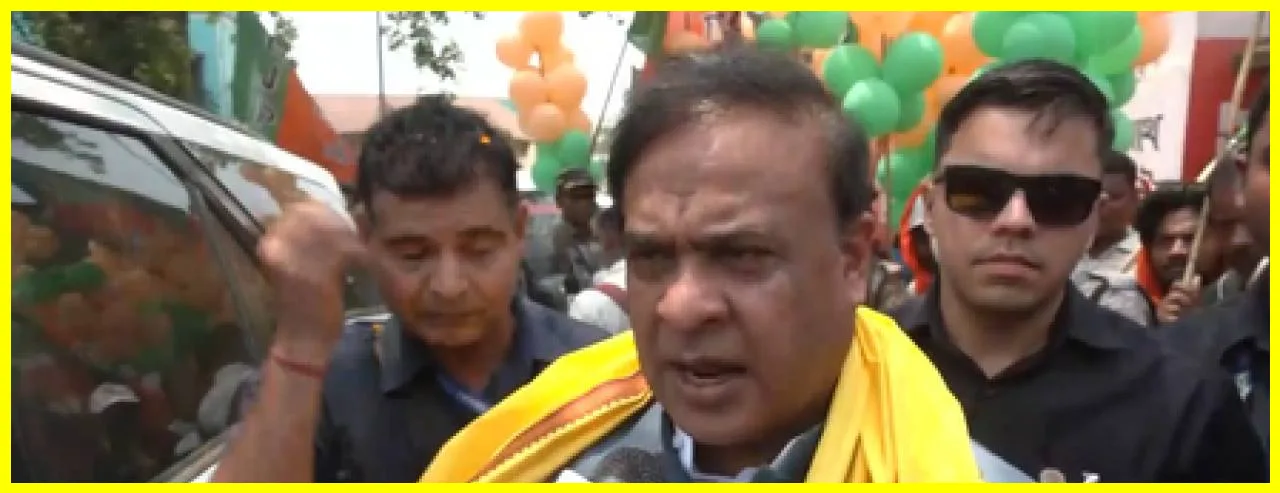
Mumbai, April 20: Assam Chief Minister Himanta Biswa Sarma asserted on Monday that the Bharatiya Janata Party (BJP) will establish its government in West Bengal this time. While campaigning for the BJP in Gaurabazar, located in the Paschim Bardhaman district, he expressed complete confidence in the party’s victory, stating that the results are “100 percent certain.”
This election will see two phases of voting for the 294 assembly seats in West Bengal, a departure from the multi-phase voting seen in previous elections. The first phase is scheduled for April 23, followed by the second phase on April 29. The counting of votes will take place on May 4.
In the first phase, votes will be cast for 152 seats across 16 districts, while the remaining 142 seats in seven districts will be contested in the second phase, completing the electoral process across the state.
This year’s election is viewed as a significant change in the state’s electoral procedure. Since the single-phase elections of 2001, most elections in West Bengal have been conducted in multiple phases, including the eight-phase election in 2021. The decision to conduct voting in just two phases this time is attributed to improved administrative preparation and enhanced security measures.
Regarding the rejection of the 131st Constitutional Amendment Bill in the Lok Sabha, Chief Minister Sarma remarked, “Women are very upset, and they will take revenge on Mamata Banerjee, DMK, and Congress.” The proposed bill related to women’s reservation failed to secure the necessary two-thirds majority in the Lok Sabha, with 298 MPs voting in favor and 230 against it.
Following this setback, two other bills related to delimitation and increasing the number of Lok Sabha seats were not presented for voting, as the government indicated they were linked to the women’s reservation bill. During the Lok Sabha debate, the center strongly supported 33 percent reservation for women in Parliament and state assemblies.

Leave a Comment