
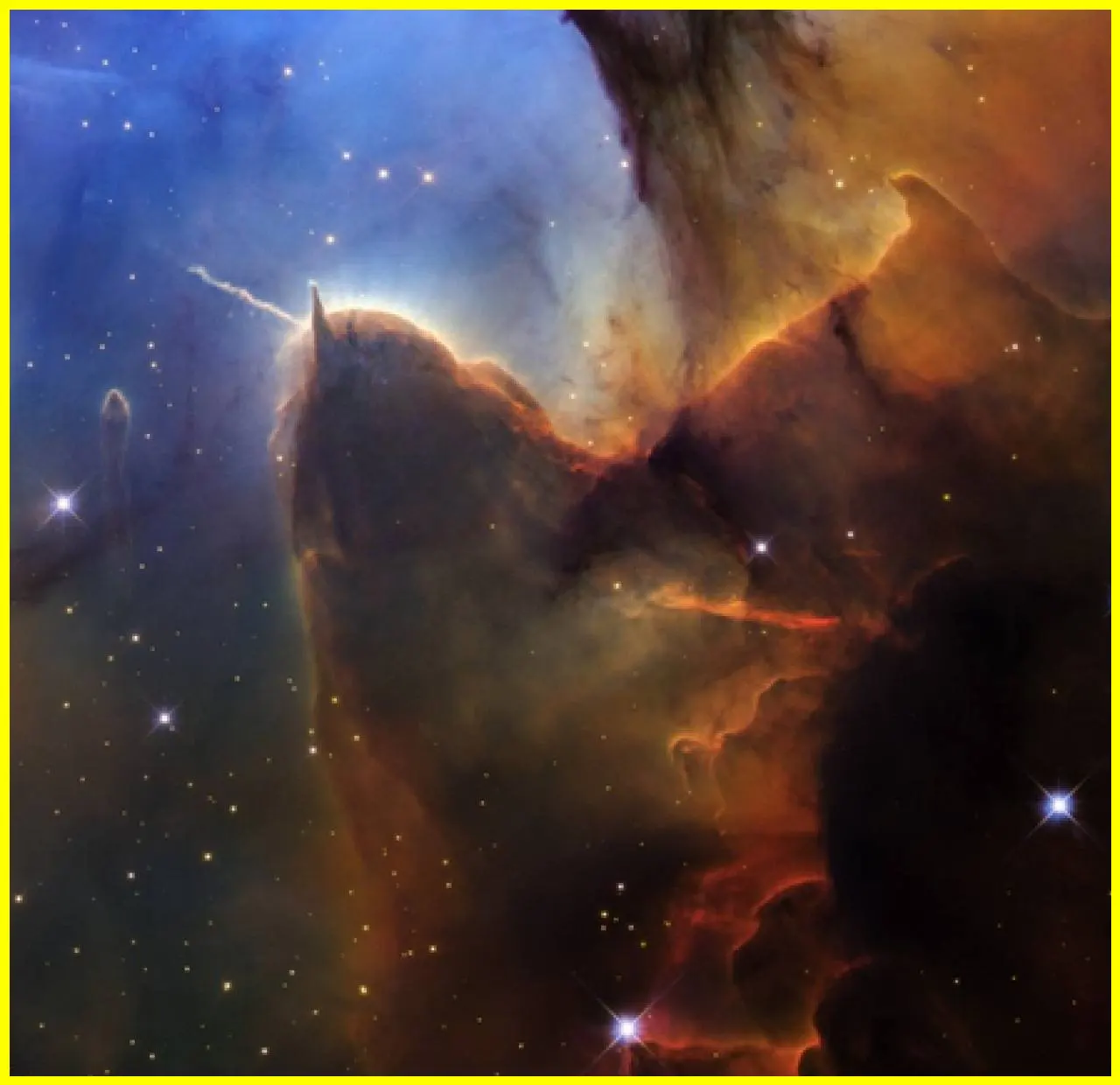
New Delhi, April 21: NASA’s Hubble Space Telescope has unveiled a captivating new image of the Trifid Nebula, a stellar nursery located approximately 5,000 light-years from Earth. This stunning photograph was released in celebration of Hubble’s 36th anniversary, which falls on April 24. The image showcases the remarkable processes of star formation and the shaping of gas and dust within this nebula.
Not only is this new image visually striking, but it also plays a crucial role in enhancing our understanding of the complex processes occurring in the universe. Hubble’s mission continues to provide scientists with valuable insights, aiding in the unraveling of space’s many mysteries.
According to scientists, powerful stars within the nebula influence the surrounding gas and dust. Their intense winds and energy push these clouds, leading to the birth of new stars. Hubble’s latest image intricately illustrates this entire process, helping astronomers comprehend how star formation evolves over time.
The photograph reveals a unique structure, which scientists describe as resembling a ‘cosmic sea lemon.’ This formation consists of clouds of gas and dust that appear similar to a marine creature. Within it, several young stars are forming, some of which are emitting energy in the form of jets. These jets stream out as plasma flows, impacting the surrounding environment.
Hubble previously observed this nebula in 1997. Now, nearly three decades later, scientists have the opportunity to compare images from the same region, revealing changes that have occurred over such a long period. Thanks to advanced technology and improved cameras, this latest image is clearer and more detailed.
The various colors in the image provide significant information. The blue areas are relatively clear, where the ultraviolet light from massive stars has ionized the gas. In contrast, the darker brown and black regions represent dense dust, where stars are still forming and are not visible in regular light.
The nebula contains numerous protostars, or newborn stars, that are not yet fully developed. In some areas, jets and gas streams indicate that these stars are releasing energy into their surroundings. This helps scientists understand how new stars interact with their environment.
One section of the image appears nearly dark due to dense dust. Scientists believe that some of the stars visible here may not actually belong to the nebula but could be relatively close to Earth. Meanwhile, some bright orange stars are fully developed and have cleared the dust around them.
Experts predict that over the coming millions of years, the gas and dust in this nebula will gradually dissipate, leaving only stars behind. The longevity and advanced technology of the Hubble Telescope have made such observations possible.
–

Leave a Comment