
New Delhi, April 19: NASA has recently launched a small yet significant satellite aimed at studying both natural and human-made radio waves emitted from Earth. This mission will enhance scientists’ understanding of the space environment surrounding our planet and improve the accuracy of space weather predictions.
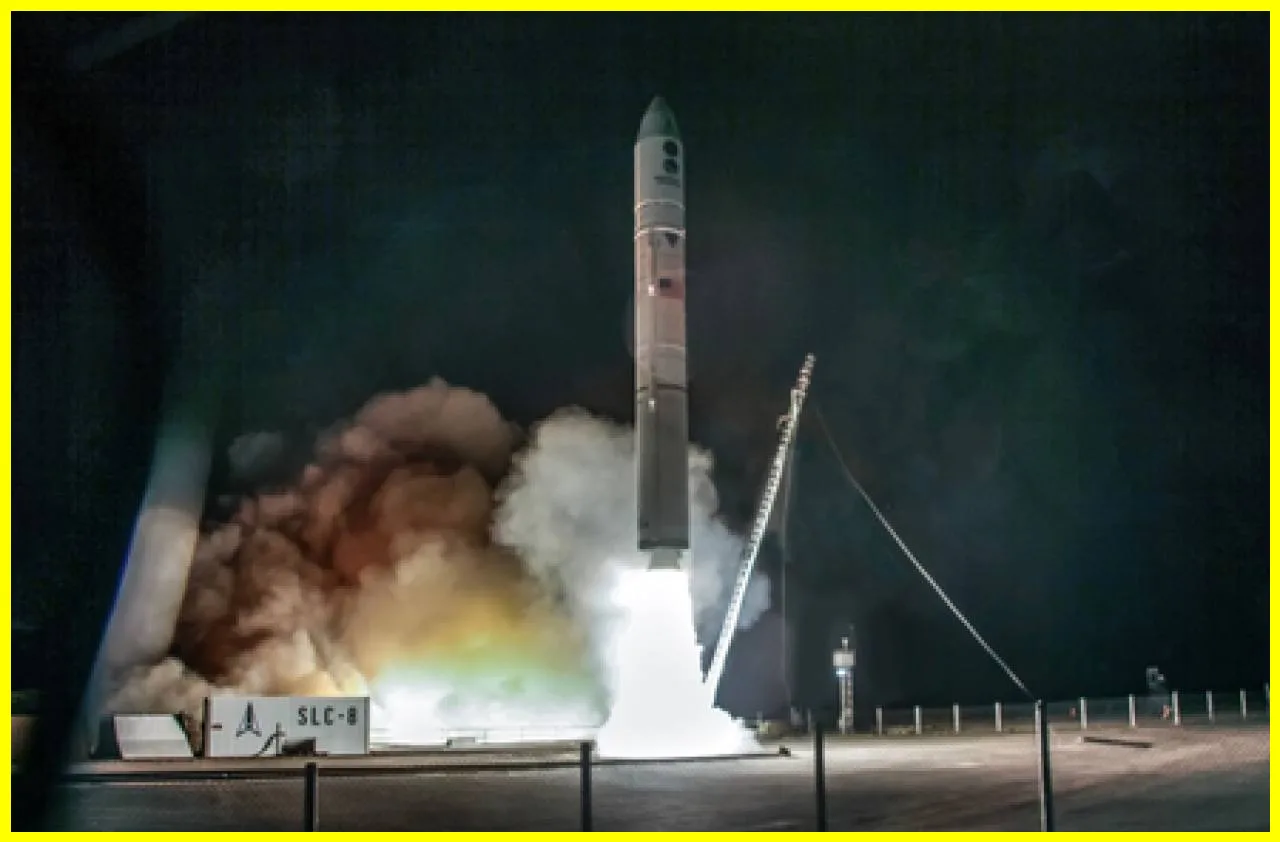
The satellite, named Canvas (Climatology of Anthropogenic and Natural VLF Wave Activity in Space), was launched on April 7, 2026, from Vandenberg Space Force Base in California aboard a Minotaur IV rocket. It is part of the U.S. Department of Defense’s Space Test Program STP-S29A mission and was organized under NASA’s Cubesat Launch Initiative (CLI).
Canvas is a 4U cubesat developed by the University of Colorado, Boulder. Its primary function is to measure very low frequency (VLF) radio waves from low Earth orbit. These waves are generated by lightning and ground-based transmitters. The satellite will assess how these waves pass through Earth’s ionosphere (the upper electrically charged part of the atmosphere) and reach the magnetosphere. VLF waves can slightly alter the paths of high-energy electrons trapped in space, occasionally allowing them to escape from radiation belts and enter the atmosphere.
By understanding the effects of these waves, Canvas aims to strengthen models of space weather. This will enhance the safety of spacecraft, satellites, and infrastructure on Earth. During its mission, Canvas will utilize two main instruments: a triaxial search coil magnetometer and a biaxial AC electric field sensor. These tools will help determine the strength and direction of VLF waves. By comparing lightning events with global lightning network data, the satellite will conduct climate-related studies on how these waves traverse the ionosphere.
Notably, NASA selected Canvas under CLI in 2021. This cost-effective mission provides students, teachers, and researchers with hands-on experience in designing, developing, and building space hardware. NASA’s Launch Services Program plays a crucial role in facilitating this initiative. Canvas is also part of the Elana 55 launch grouping. Over the next year, Canvas will continuously collect data, which will be vital for understanding the flow of energy from Earth into space.

Leave a Comment