
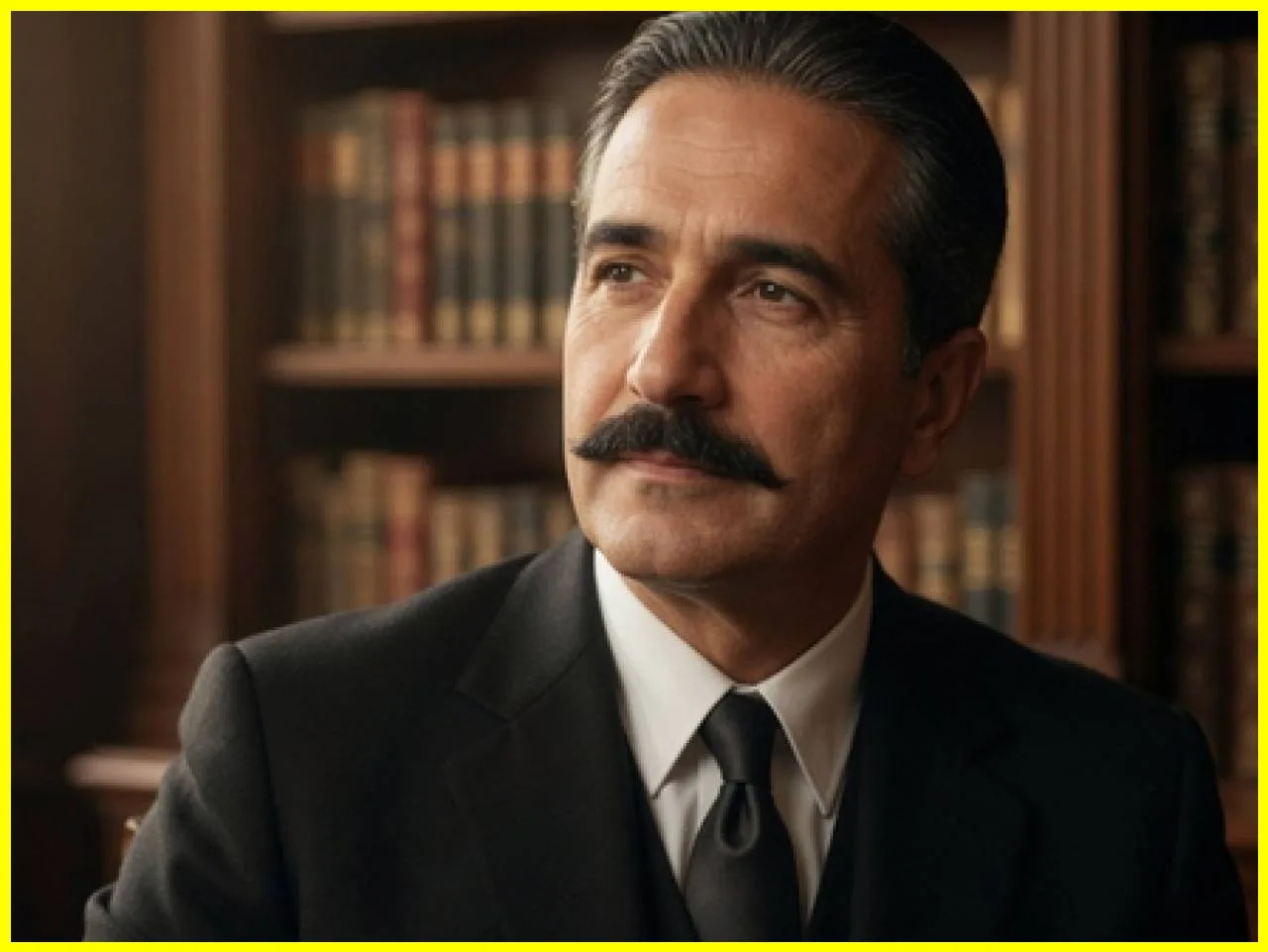
Mumbai, April 20: “Elevate yourself to such heights that before every destiny, God Himself will ask you, ‘What is your wish?'” These powerful lines, which inspire self-empowerment, were penned by the renowned Urdu and Persian poet, Allama Muhammad Iqbal.
Born in Sialkot, India, into a Kashmiri Muslim family, Iqbal’s writings transcended religion, portraying India and Lord Ram with purity, bravery, and love. His poem “Labrez hai sharab-e-haqiqat se jam-e-Hind” is still celebrated today.
Iqbal was a significant figure in Urdu, Arabic, and Persian literature. At the time of his birth, India and Pakistan were one nation, which is why his work often reflected the pride of India and the essence of Urdu. Although his poetry exuded love and self-confidence, his early writings also expressed resistance against British rule, showcasing his commitment to Indian nationalism.
Initially, Iqbal wrote solely in Urdu, but by 1903, he had acquired knowledge in philosophy, English literature, and Arabic. He worked as an Arabic teacher at Oriental College. In 1908, he earned a degree in philosophy from Cambridge University and a doctorate from Munich University, later returning to India as a qualified barrister.
The iconic song “Sare Jahan Se Achha Hindustan Hamara” also originated from Iqbal’s pen. This song was sung in the Parliament building at midnight on August 15, 1947, when India gained independence. Notably, during the India-Pakistan partition, Iqbal advocated for the division of the country. On December 29, 1930, at the 25th session of the Muslim League in Allahabad, Iqbal was elected president and encouraged Muhammad Ali Jinnah to join the Muslim League, amplifying the call for a separate nation.
Iqbal is often regarded as the spiritual father of Pakistan. Through his poetry, he awakened consciousness among Muslims regarding Islam. He even suggested uniting Punjab with Pakistan. Over time, it is said that the nationalist poet’s views shifted significantly, leading him towards a more rigid form of extremism.
My name is Himanshu Tiwari. I am an experienced content writer with several years of expertise in the field. Currently, I contribute to Daily Kiran, creating engaging and informative content across a variety of categories including TECHNOLOGY, health, travel, education, and automobiles. My goal is to deliver accurate, insightful, and captivating information through my words to help readers stay informed and empowered.
Leave a Comment