
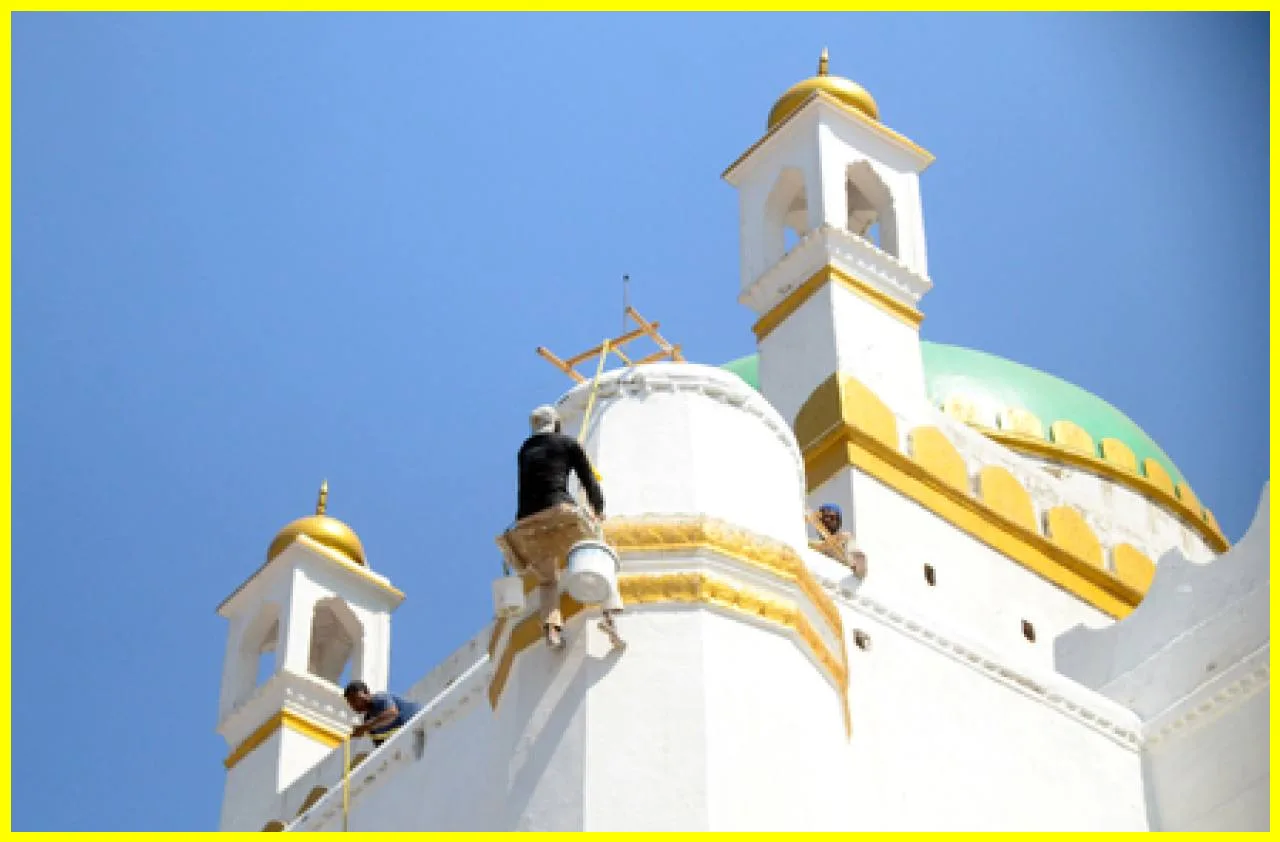
New Delhi, April 19: The Supreme Court will hear a petition filed by the Muslim community on April 20, challenging a survey order issued by the Chandausi Court regarding the Shahi Jama Masjid located in Sambhal district, Uttar Pradesh.
According to the ’cause list’ released on the Supreme Court’s website, a bench comprising Justice PS Narasimha and Justice Alok Aradhe will preside over the case.
This petition has been filed by the mosque committee, opposing the survey order related to the ongoing dispute over the Shahi Jama Masjid. Hindu claimants assert that the mosque was constructed over the ruins of an existing temple.
Previously, the Supreme Court had directed both Hindu and Muslim parties to maintain the status quo at the disputed site while hearing a special leave petition (SLP) challenging the Allahabad High Court’s refusal to stay the survey proceedings.
The dispute is linked to the Hindu claim that the mosque was built on the remnants of an ancient Harihar temple, allegedly demolished during the Mughal era. Conversely, the mosque committee has raised questions about the admissibility of the lawsuit and objected to the manner in which the survey order was issued.
Tensions escalated after the Allahabad High Court upheld the Chandausi trial court’s directive permitting the site survey, finding no legal flaws in the order. The High Court also dismissed the mosque committee’s petition seeking to stay the proceedings. Following this, the mosque committee approached the Supreme Court, arguing that the survey order was passed without providing them a fair opportunity to present their case and violated established legal principles.
This case becomes significant in the context of the ‘Places of Worship Act, 1991’, which prohibits changes to the nature of worship places and mandates that their religious character remains as it was on August 15, 1947.
However, the Hindu side contends that this dispute falls outside the scope of the Act, citing provisions from the ‘Ancient Monuments and Archaeological Sites and Remains Act, 1958’.
Previous tensions surrounding the Shahi Jama Masjid dispute have resulted in violence in Sambhal during a court-ordered survey, leading to multiple fatalities.
In its arguments before the court, the Archaeological Survey of India (ASI) stated that the Shahi Jama Masjid is a monument protected by the government and cannot be considered a public worship site in the absence of supporting records.

Leave a Comment