
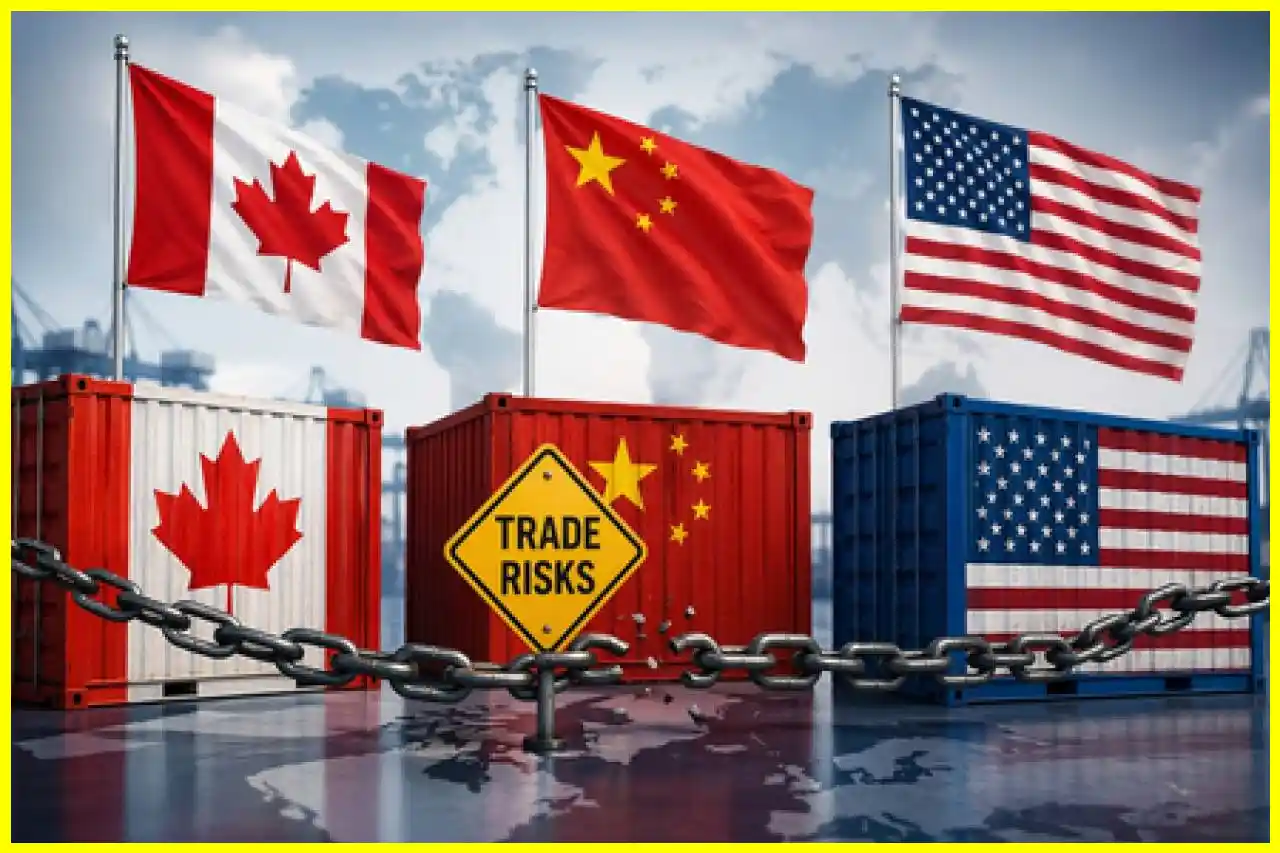
New Delhi, April 22: Canada’s efforts to strengthen trade relations with China may pose risks to its economic security and strain its ties with the United States.
According to a report by Global News, former Canadian diplomat Michael Kovrig warned that Ottawa’s shifting strategy towards China is a dangerous step that Washington may not view favorably. This change could impact ongoing negotiations with Canada’s largest trading partner, the U.S.
Kovrig stated, “The real issue is that most of our problems with the U.S. are not solved by China.” He added that if Canada gets too close to China, it might appear as an unreliable ally in the eyes of the U.S.
Currently, about 75% of Canada’s exports go to the U.S., while only around 4% are directed towards China. This stark difference highlights the dependency both countries have on each other.
Recently, under Prime Minister Mark Carney’s leadership, the Canadian government announced an agreement that includes the limited import of Chinese electric vehicles and tariff reductions on certain Canadian agricultural products. The goal of this agreement is to increase exports to China by 50% by 2030.
Kovrig emphasized that China is currently in a position to sell rather than buy, aiming to make the world more dependent on its exports. He warned that China could gradually exert pressure to increase its market share, such as demanding higher quotas for Chinese electric vehicles in the future.
He illustrated that cheap imports could harm domestic industries, similar to how large retail stores overshadow small shopkeepers, ultimately reducing competition and increasing dependency.
Kovrig noted that sectors like canola, pork, and seafood have already become heavily reliant on the Chinese market, making them vulnerable during any trade disruptions. He stated, “If China suddenly halts trade, it would be economically devastating for these sectors.” He also mentioned that such dependency could impact domestic policies.
However, Kovrig did not advocate for a complete disengagement from China. He believes that maintaining relations is essential, but it should be done thoughtfully and with strict regulations to prevent any exploitation.
The report also indicated that other experts share similar concerns, warning that this agreement could affect the renegotiation of the Canada-United States-Mexico Agreement (CUSMA).

My name is Himanshu Tiwari. I am an experienced content writer with several years of expertise in the field. Currently, I contribute to Daily Kiran, creating engaging and informative content across a variety of categories including TECHNOLOGY, health, travel, education, and automobiles. My goal is to deliver accurate, insightful, and captivating information through my words to help readers stay informed and empowered.



Leave a Comment